
News
What happened?
Global Gateway Agroecology Training Initiative
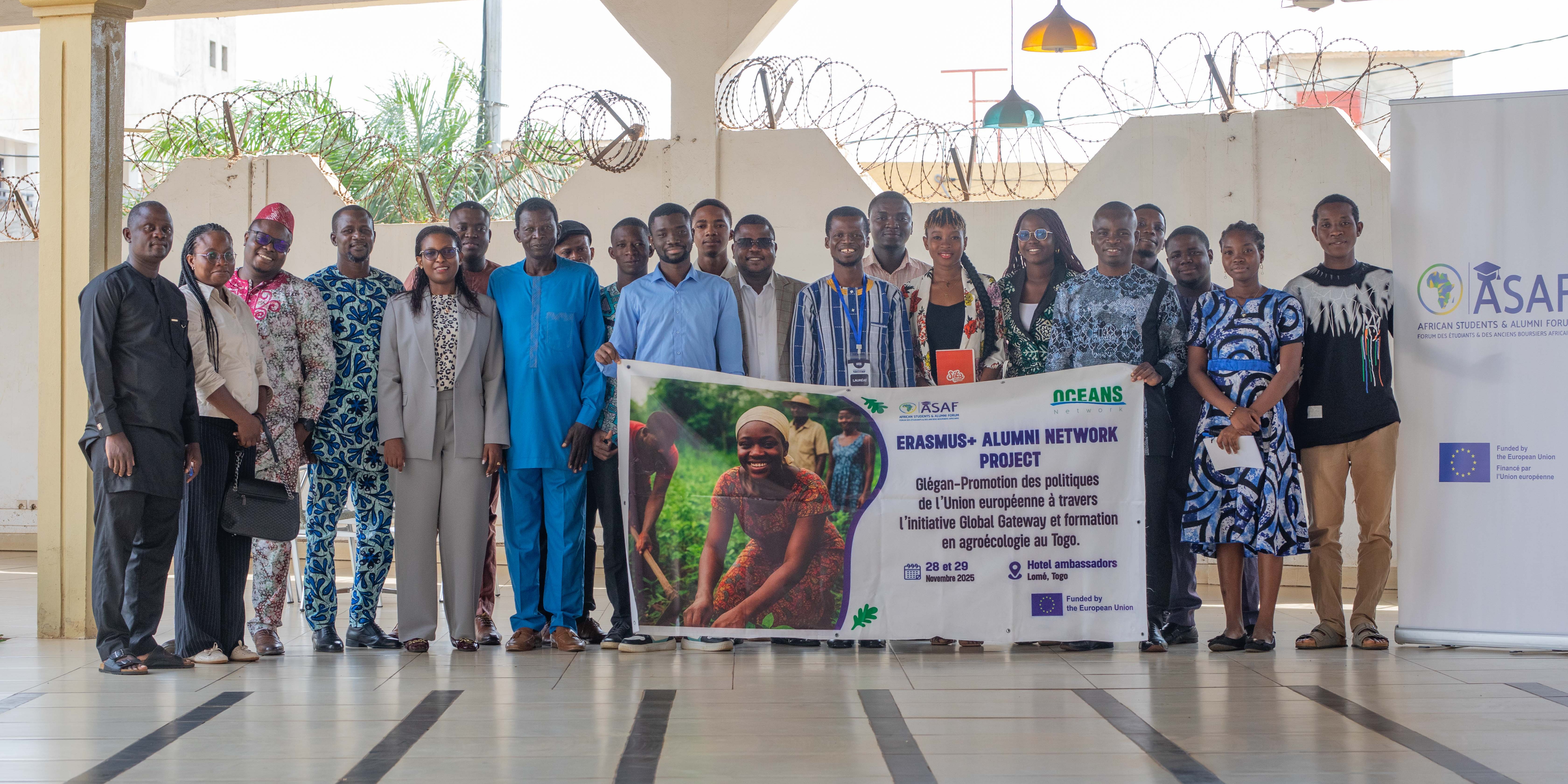
The GLEGAN project advances European Union policies under the Global Gateway Initiative by delivering targeted agroecological training to young professionals and local stakeholders. Held on 28–29 November 2025 at Hotel Ambassador in Lomé, Togo, the initiative aimed to strengthen sustainable agriculture, enhance climate resilience and foster inclusive rural development.
The GLEGAN project stands as a dynamic regional initiative committed to advancing European Union (EU) engagement in West Africa through the overarching vision of the Global Gateway Initiative, which prioritises sustainable development, education, and cooperation. Anchored in its objective to enhance human capital and promote agroecological innovation, the project serves as a bridge linking Togo and Benin through a collaborative framework that brings together students, young professionals, researchers, civil society actors and institutional representatives. At its core, GLEGAN seeks to integrate EU approaches to education and sustainability with the local realities of West African agriculture by cultivating knowledge exchange, dialogue and collective action toward inclusive and climate-smart rural development.
This goal was embodied in a flagship event held on 28 and 29 November at the Hôtel Ambassador in Lomé, Togo, which convened a vibrant and diverse assembly of academics, practitioners, youth leaders and development organisations, creating a platform for shared learning and collaboration. One of the project’s primary components focuses on improving access to EU scholarship opportunities to empower young African talent. Recognising the persistent challenge of limited access to accurate and timely information on international education pathways, GLEGAN organised targeted sessions to present EU-funded mobility programmes, academic scholarships and professional training schemes that align with the ambitions of the Global Gateway initiative. These sessions provided comprehensive insights into eligibility requirements, application processes, and strategies for building competitive profiles, thereby helping participants navigate the complexities of international academic exchange.
By equipping aspiring scholars and professionals with relevant information and mentorship, the project contributes to nurturing a well-informed generation of African experts capable of addressing pressing issues related to agriculture, climate and environmental sustainability both locally and on a regional scale. A second cornerstone of the initiative lies in its commitment to strengthening agroecological education and enhancing climate resilience in rural communities. Training workshops introduced participants to vital topics such as soil and water conservation, climate-smart agriculture, biodiversity protection and the integration of indigenous ecological knowledge into modern farming systems. Through participatory learning methods, case studies and collaborative discussions, these sessions illuminated how agroecology fosters resilient, low-input farming models that not only preserve natural resources but also secure livelihoods against the growing effects of climate change.
Youth involvement was a central focus, emphasising their role as innovators and agents of transformation in agricultural systems while connecting local action to broader EU and global sustainability objectives. The project’s holistic approach ensures that technical learning is coupled with conceptual understanding, empowering participants to design and implement context-appropriate, environmentally responsible farming systems that strengthen community resilience.
Beyond its educational and training dimensions, GLEGAN also promotes regional dialogue and multi-stakeholder engagement, recognising cooperation as the cornerstone of sustainable development. The Lomé event facilitated dynamic exchanges between institutions and practitioners from Togo and Benin, fostering cross-border partnerships, experience sharing and dialogue around common agricultural and educational priorities.
By linking people, ideas, and initiatives across national boundaries, the project enhances regional integration and cultivates a shared vision for an agroecological transition that aligns with EU values of inclusiveness, sustainability and human development, ultimately contributing to a more climate-resilient and prosperous West Africa.
Lomé, Togo, 29 November 2025
Cossi Sosthène ASSOGBADJO (Sostheneassogbadjo95@gmail.com)
Edited by the Erasmus+ Support Service Team